
Forex Market Hours: When to Trade for Maximum Profit
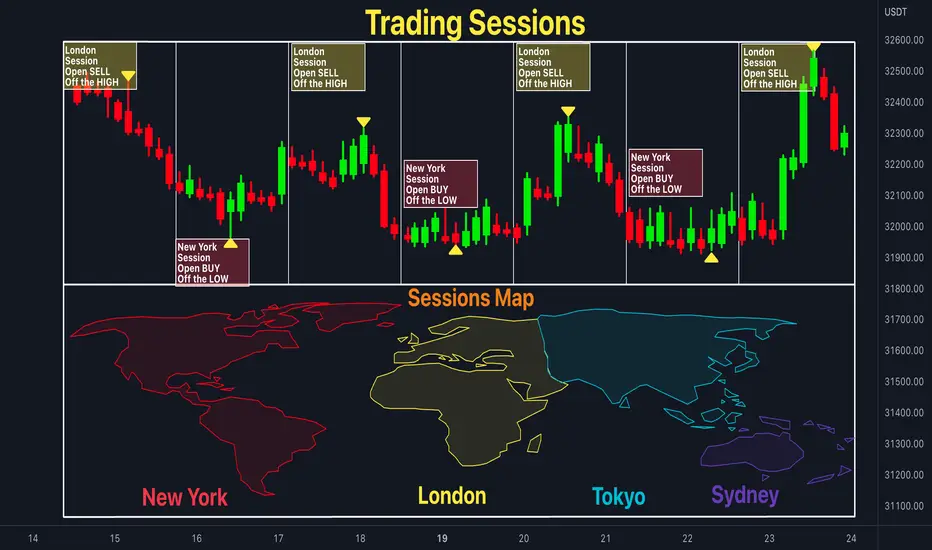
Quick Answer: The forex market operates 24 hours a day, 5 days a week, divided into four major trading sessions: Sydney, Tokyo, London, and New York. The best time to trade forex is during session overlaps, especially the London-New York overlap (1 PM - 5 PM GMT), which offers the highest trading volume and volatility.
Understanding forex market hours is crucial for every trader who wants to maximize their profit potential. Unlike stock markets with fixed trading hours, the foreign exchange market operates around the clock during weekdays, creating unique opportunities and challenges for traders worldwide.
Whether you're a beginner trying to figure out when does forex market open or an experienced trader looking to optimize your trading schedule, this comprehensive guide will help you navigate the complex world of forex trading sessions and identify the best time to trade forex based on your strategy and currency pairs.
Understanding the 24-Hour Forex Market
The forex market is unique among financial markets because it operates continuously for 24 hours a day, five days a week. This round-the-clock operation is possible due to the global nature of currency trading and the interconnected network of financial centers around the world.
Why Forex Trades 24 Hours, 5 Days a Week
The forex market schedule is determined by the opening and closing times of major financial centers across different time zones. As the sun rises and sets around the globe, different markets open and close, creating a continuous trading cycle from Monday morning in Sydney to Friday evening in New York.
This 24-hour operation exists because:
- Global Currency Needs: International businesses, governments, and financial institutions need to exchange currencies at all hours to facilitate global trade and investment
- Decentralized Market Structure: Unlike centralized exchanges, forex trading happens over-the-counter (OTC) through a global network of banks, brokers, and financial institutions
- Multiple Time Zones: Major financial centers operate in different time zones, ensuring that at least one major market is always open during business hours
- Electronic Trading: Modern technology enables instantaneous transactions across borders, making continuous trading possible
The Global Nature of Currency Trading
Currency trading is inherently global because it involves the exchange of one country's currency for another. When you trade EUR/USD, you're simultaneously buying euros and selling US dollars, connecting two different economic regions.
The major forex trading sessions are named after the financial centers that dominate trading activity during those hours: Sydney, Tokyo, London, and New York. Each session has its own characteristics, trading volumes, and currency pair preferences.
Weekend Market Closures
While the forex market operates 24/5, it closes for the weekend. The market officially closes at 5 PM EST on Friday in New York and reopens at 5 PM EST on Sunday when the Sydney session begins (which is Monday morning in Australia).
Four Main Trading Sessions
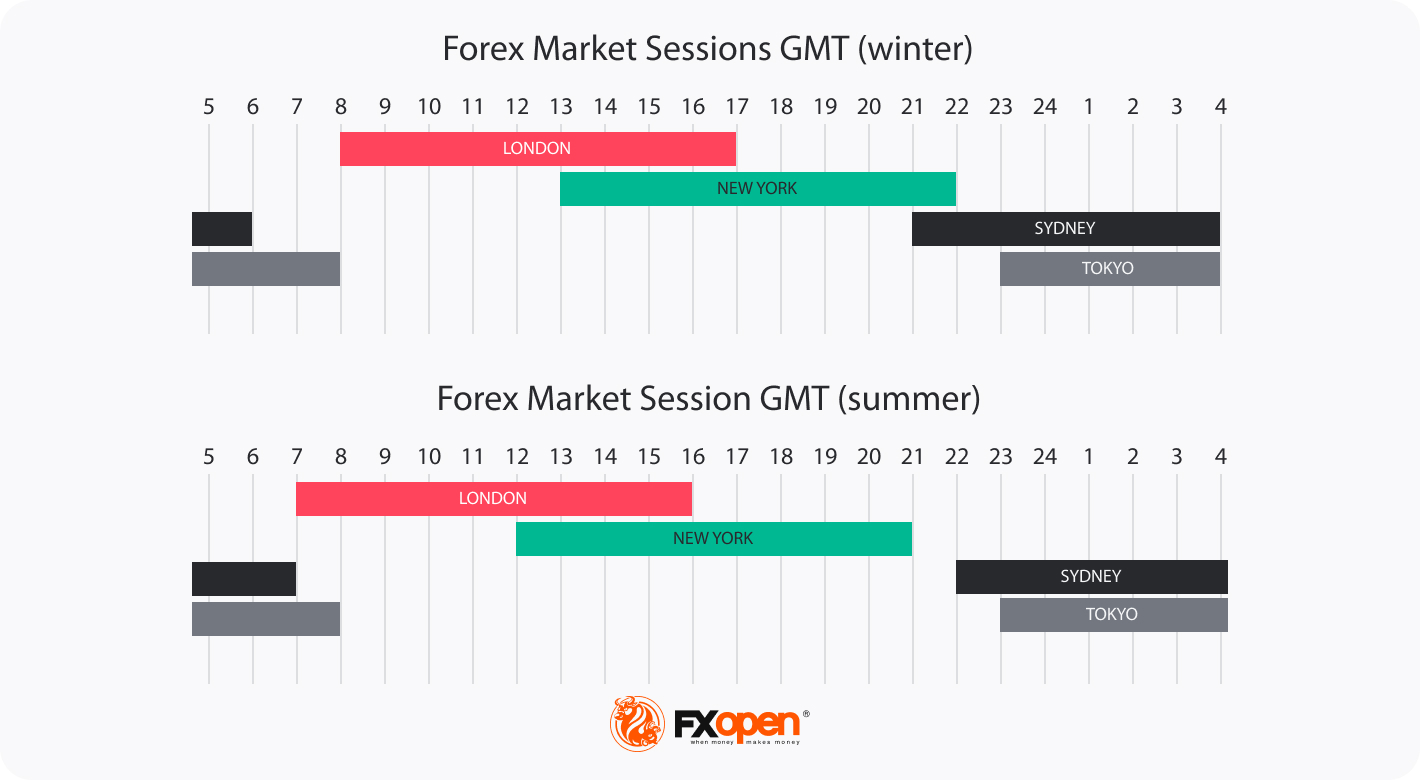
Understanding the characteristics of each forex trading session is essential for developing an effective trading strategy. Let's explore each session in detail:
Sydney Session (10 PM - 7 AM GMT)
Time: 10 PM - 7 AM GMT (5 PM - 2 AM EST)
Characteristics: The Sydney session marks the beginning of the forex trading week. It's generally the quietest session with lower trading volumes compared to other major sessions.
Best Pairs to Trade:
- AUD/USD (Australian Dollar/US Dollar)
- NZD/USD (New Zealand Dollar/US Dollar)
- AUD/JPY (Australian Dollar/Japanese Yen)
- AUD/NZD (Australian Dollar/New Zealand Dollar)
Volatility: Generally low, except when major Australian or New Zealand economic data is released.
Ideal For: Traders who prefer calmer markets with tighter ranges, or those located in Asian/Pacific time zones.
Tokyo/Asian Session (12 AM - 9 AM GMT)
Time: 12 AM - 9 AM GMT (7 PM - 4 AM EST)
Characteristics: The Tokyo session, also called the Asian session, sees increased activity as Japan's financial markets open. It accounts for approximately 6% of all forex transactions.
Best Pairs to Trade:
- USD/JPY (US Dollar/Japanese Yen)
- EUR/JPY (Euro/Japanese Yen)
- GBP/JPY (British Pound/Japanese Yen)
- AUD/JPY (Australian Dollar/Japanese Yen)
Volatility: Moderate. Volatility increases during Japanese economic announcements or when the Bank of Japan makes policy decisions.
Ideal For: Traders focusing on Asian currencies and those who prefer trading yen pairs.
London Session (8 AM - 5 PM GMT)
Time: 8 AM - 5 PM GMT (3 AM - 12 PM EST)
Characteristics: The London session is the most important trading session, accounting for approximately 35% of all forex transactions. It's characterized by high liquidity and significant price movements.
Best Pairs to Trade:
- EUR/USD (Euro/US Dollar)
- GBP/USD (British Pound/US Dollar)
- USD/CHF (US Dollar/Swiss Franc)
- EUR/GBP (Euro/British Pound)
- EUR/CHF (Euro/Swiss Franc)
Volatility: High, especially during the first few hours when traders react to overnight developments and European economic data.
Ideal For: Active traders seeking high volatility and trading opportunities, particularly those trading European currencies.
New York Session (1 PM - 10 PM GMT)
Time: 1 PM - 10 PM GMT (8 AM - 5 PM EST)
Characteristics: The New York session is the second-most active session, accounting for approximately 19% of all forex transactions. It coincides with the release of significant US economic data.
Best Pairs to Trade:
- EUR/USD (Euro/US Dollar)
- GBP/USD (British Pound/US Dollar)
- USD/JPY (US Dollar/Japanese Yen)
- USD/CAD (US Dollar/Canadian Dollar)
- USD/CHF (US Dollar/Swiss Franc)
Volatility: High, particularly during the first few hours when US economic data is released and during the overlap with the London session.
Ideal For: Traders focusing on USD pairs and those who trade during US market hours.
Forex Market Hours Clock Reference (GMT)
| Trading Session | Opens (GMT) | Closes (GMT) | Opens (EST) | Closes (EST) |
|---|---|---|---|---|
| Sydney | 10:00 PM | 7:00 AM | 5:00 PM | 2:00 AM |
| Tokyo | 12:00 AM | 9:00 AM | 7:00 PM | 4:00 AM |
| London | 8:00 AM | 5:00 PM | 3:00 AM | 12:00 PM |
| New York | 1:00 PM | 10:00 PM | 8:00 AM | 5:00 PM |
Trading Session Overlaps: Peak Opportunity Times
Best time to trade forex often coincides with forex session overlaps when major markets are open simultaneously. During these periods, trading volume increases significantly, resulting in greater liquidity, tighter spreads, and more trading opportunities.
London-New York Overlap (1 PM - 5 PM GMT / 8 AM - 12 PM EST)
Duration: 4 hours
Why It's Important: This is the most significant overlap period, accounting for more than 70% of all forex trading volume. Both the world's largest (London) and second-largest (New York) forex markets are open simultaneously.
Characteristics:
- Highest trading volume of any session period
- Maximum liquidity across all major currency pairs
- Tightest bid-ask spreads
- Increased volatility and price movements
- Major US economic data releases (8:30 AM EST)
Best Pairs: EUR/USD, GBP/USD, USD/CHF, USD/CAD
Ideal For: Day traders and scalpers seeking maximum opportunities and tight spreads.
Tokyo-London Overlap (8 AM - 9 AM GMT / 3 AM - 4 AM EST)
Duration: 1 hour
Why It's Important: This brief overlap sees increased activity in European and Asian currency pairs, particularly as London traders react to overnight Asian developments.
Characteristics:
- Moderate increase in trading volume
- Brief period of increased volatility
- Good for EUR/JPY and GBP/JPY traders
- European traders entering the market
Best Pairs: EUR/JPY, GBP/JPY, EUR/USD
Ideal For: Traders comfortable with early morning hours (in Western time zones) who focus on yen crosses.
Sydney-Tokyo Overlap (12 AM - 7 AM GMT / 7 PM - 2 AM EST)
Duration: Up to 7 hours (depending on daylight saving time)
Why It's Important: While this is the quietest overlap, it can still offer opportunities for traders focusing on AUD and JPY pairs.
Characteristics:
- Lower trading volume compared to other overlaps
- Suitable for range trading strategies
- Good for traders in Asian/Pacific time zones
- Less volatile market conditions
Best Pairs: AUD/JPY, NZD/JPY, AUD/USD
Ideal For: Conservative traders preferring less volatile conditions and those in compatible time zones.
Why Session Overlaps Increase Volatility
Session overlaps increase volatility for several key reasons:
- Increased Market Participation: More traders from different regions are active simultaneously, increasing order flow
- Higher Trading Volume: Combined activity from two major financial centers creates exceptional liquidity
- News and Data Releases: Important economic announcements often coincide with overlap periods, especially during the London-New York overlap
- Institutional Activity: Banks and institutional traders execute large orders during high-liquidity periods to minimize market impact
- Arbitrage Opportunities: Price discrepancies between different markets are quickly exploited, causing rapid price adjustments
Optimizing Your Trading Schedule
Now that you understand forex market hours and session characteristics, let's explore how to create a personalized trading schedule that aligns with your strategy, lifestyle, and currency pair preferences.
Matching Currency Pairs to Trading Sessions
Different currency pairs are most active during specific sessions. Trading pairs when their respective markets are open ensures better liquidity, tighter spreads, and more reliable price action.
European Currency Pairs (EUR, GBP, CHF):
- Most active: London session (8 AM - 5 PM GMT)
- Best time: London-New York overlap (1 PM - 5 PM GMT)
- Examples: EUR/USD, GBP/USD, EUR/GBP, USD/CHF
Asian Currency Pairs (JPY, AUD, NZD):
- Most active: Tokyo session (12 AM - 9 AM GMT)
- Best time: Sydney-Tokyo overlap for AUD/JPY, NZD/JPY
- Examples: USD/JPY, AUD/USD, NZD/USD, AUD/JPY
US Dollar Pairs:
- Most active: New York session (1 PM - 10 PM GMT)
- Best time: London-New York overlap (1 PM - 5 PM GMT)
- Examples: EUR/USD, GBP/USD, USD/CAD, USD/JPY
Volatility Patterns Throughout the Day
Understanding volatility patterns helps you align your trading strategy with market conditions:
Low Volatility Periods:
- Sydney Session: Quietest period, ideal for range trading
- Late New York Session: Reduced activity as traders wind down
- Friday Afternoons: Lower participation ahead of the weekend
High Volatility Periods:
- London Open: 8 AM GMT sees significant price movements
- New York Open: 1 PM GMT (8 AM EST) brings fresh volatility
- US Economic Data: 8:30 AM EST releases create major movements
- London-New York Overlap: Peak trading activity and volatility
Creating a Personalized Trading Schedule
Follow these steps to develop a forex market schedule that works for you:
Step 1: Assess Your Availability
Determine which trading sessions align with your daily schedule. If you have a full-time job, you might only be able to trade during evening hours in your time zone.
Step 2: Identify Your Trading Style
- Scalpers: Need high liquidity and tight spreads → Trade during London-New York overlap
- Day Traders: Seek volatility and opportunities → Focus on London and New York sessions
- Swing Traders: Hold positions for days/weeks → Can trade any session, focusing on quality setups
- Position Traders: Long-term holders → Session timing less critical, focus on fundamental analysis
Step 3: Choose Your Currency Pairs
Select 2-4 currency pairs that are active during your available trading hours. Specializing in fewer pairs allows you to understand their behavior better.
Step 4: Account for Economic Events
Mark important economic data releases on your calendar. Major announcements can cause significant volatility regardless of the session:
- US Non-Farm Payrolls (First Friday of month, 8:30 AM EST)
- Federal Reserve Interest Rate Decisions
- European Central Bank Announcements
- Bank of Japan Policy Meetings
- GDP, Inflation, and Employment Data
Step 5: Test and Refine
Start with a demo account to test your schedule. Track your performance across different sessions to identify when you trade most successfully.
Sample Trading Schedule for Different Trader Types
Full-Time Worker (US East Coast):
- Before work: 7:00 AM - 8:30 AM EST (London session, pre-US open)
- After work: 5:00 PM - 8:00 PM EST (Late New York/early Sydney)
- Focus: EUR/USD, GBP/USD during morning; AUD/USD in evening
Full-Time Trader (Europe):
- Morning: 8:00 AM - 1:00 PM GMT (London session)
- Afternoon: 1:00 PM - 5:00 PM GMT (London-New York overlap)
- Focus: EUR/USD, GBP/USD, USD/CHF
Part-Time Trader (Asia):
- Evening: 8:00 PM - 12:00 AM (Tokyo session)
- Focus: USD/JPY, AUD/JPY, EUR/JPY
Conclusion
Understanding forex market hours is fundamental to trading success. By knowing when does forex market open, recognizing the characteristics of each trading session, and leveraging forex session overlaps, you can significantly improve your trading results.
Remember these key takeaways:
- The forex market operates 24 hours, 5 days a week across four major sessions
- The best time to trade forex is typically during session overlaps, especially London-New York
- Match your currency pairs to appropriate trading sessions for optimal liquidity
- Align your trading schedule with your lifestyle, trading style, and the volatility you need
- High volatility periods offer more opportunities but also increased risk
- Always account for major economic events that can impact market behavior
Start by observing how different sessions affect your preferred currency pairs. Use a demo account to test trading during various times before committing real capital. Over time, you'll discover which forex market schedule works best for your personal situation and trading strategy.
The global nature of forex trading means there's always an opportunity somewhere in the world. Your job is to find the times that align with your schedule, strategy, and success patterns. Happy trading!
- Download a forex market hours indicator for your trading platform
- Create a personalized trading schedule based on your time zone
- Mark major economic events on your calendar
- Start paper trading during different sessions to find your optimal times
- Keep a trading journal noting which sessions produce your best results
Comments
Post a Comment