
Forex Trading Psychology: Master Your Mind to Master the Markets

Forex trading is 80% psychology and 20% technique. While most traders focus entirely on finding profitable setups, they neglect the mental game that separates winners from losers. Fear, greed, overconfidence, and revenge trading destroy more accounts than bad analysis ever could. Master your mind, and you'll master the markets.
The Psychology Foundation of Trading
Why Trading Psychology Matters More Than Strategy
Even the best trading strategy in the world will fail if executed with poor psychology. Here's why:
- Emotions override logic: Fear and greed make us act against our plan
- Inconsistency kills performance: Emotional trading leads to unpredictable results
- Stress affects decision-making: Poor emotional control clouds judgment
- Account destruction risk: Emotional decisions often involve excessive risk
- Long-term sustainability: Only emotionally stable traders last
The Four Emotions That Kill Trading Accounts

1. Fear
😰 Fear of Losing
- Taking profits too early
- Moving stops against position
- Avoiding trades after losses
- Reducing position sizes unnecessarily
- Closing winning trades prematurely
😨 Fear of Missing Out (FOMO)
- Chasing price movements
- Entering late in trends
- Ignoring analysis for "gut feelings"
- Trading without proper setup
- Overtrading in fast markets
2. Greed
😈 Greed for More Profits
- Moving take profits further away
- Never taking any profits
- Adding to losing positions
- Overleveraging for bigger gains
- Ignoring risk management rules
💰 Greed for Quick Money
- Seeking "get rich quick" schemes
- Trading too frequently
- Focusing on short-term gains
- Ignoring long-term sustainability
- Taking excessive risks
3. Overconfidence
🎯 Overconfidence After Wins
- Increasing position sizes after winning trades
- Ignoring risk management rules
- Taking trades outside your strategy
- Believing you "can't lose"
- Becoming careless with execution
Warning: Overconfidence after wins is more dangerous than fear after losses. It leads to larger, more damaging losses.
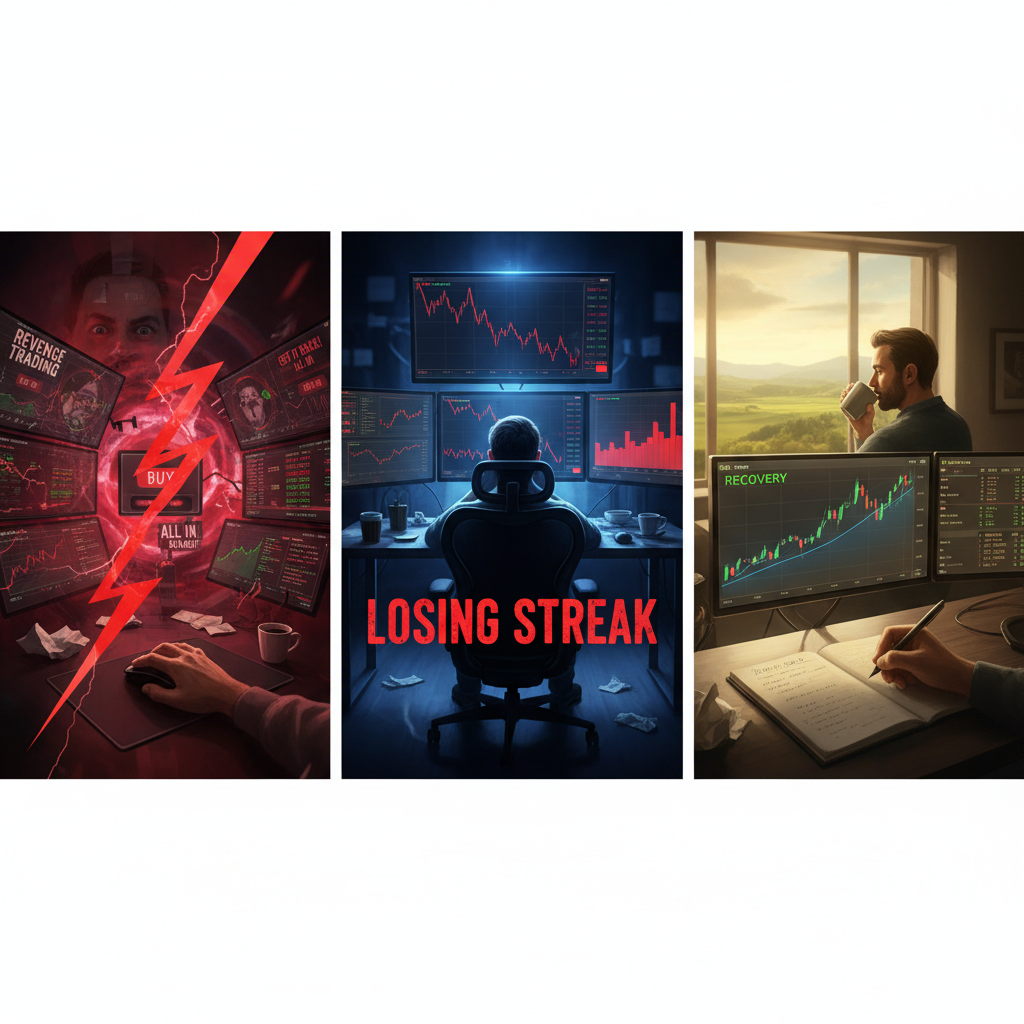
4. Revenge Trading
🔥 Revenge Trading After Losses
- Trying to "make it back" immediately
- Ignoring analysis to trade emotionally
- Increasing risk to recover losses faster
- Trading different pairs to "find something"
- Staying in the market longer to "prove you're right"
Professional Trading Mindset

🧠 The Professional Trader's Mind
Core Beliefs
- Process over Results: Focus on executing the plan, not individual outcomes
- Losses are Business Expenses: Part of the cost of doing business
- Consistency over Perfection: Steady performance beats home runs
- Long-term Thinking: Building wealth gradually over time
- Discipline over Intuition: Following rules, not feelings
Emotional Response Patterns
- After Losses: Accept it, analyze it, move on
- After Wins: Stay humble, review execution, maintain discipline
- During Drawdowns: Trust the process, stick to risk management
- During Winning Streaks: Remain cautious, don't change strategy
Building Trading Discipline
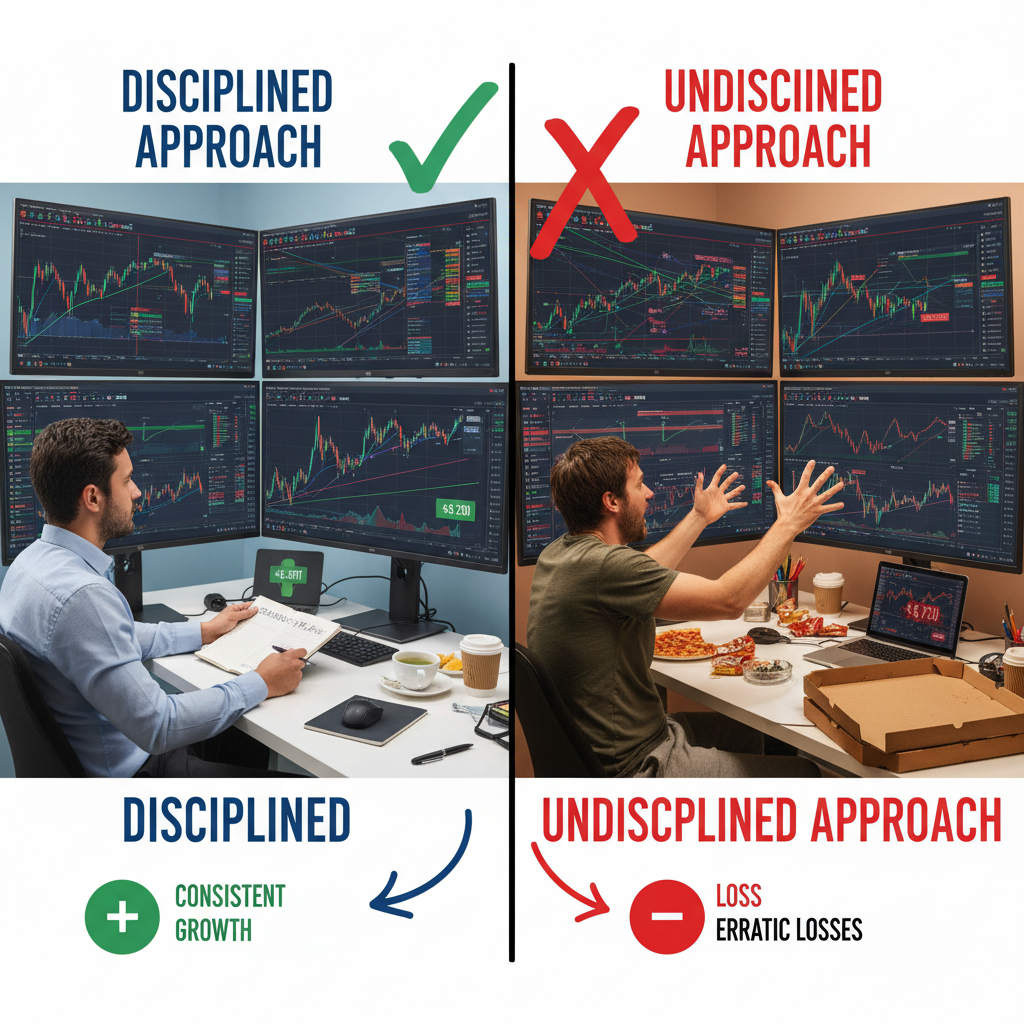
1. Creating and Following Rules
📋 Essential Trading Rules
- Never risk more than 1-2% per trade
- Always use stop losses
- Set take profit levels before entering
- Don't move stops against positions
- Take a break after hitting daily loss limits
- Don't trade revenge after losses
- Stick to your strategy, no exceptions
2. Developing Emotional Control
🧘 Emotional Control Techniques
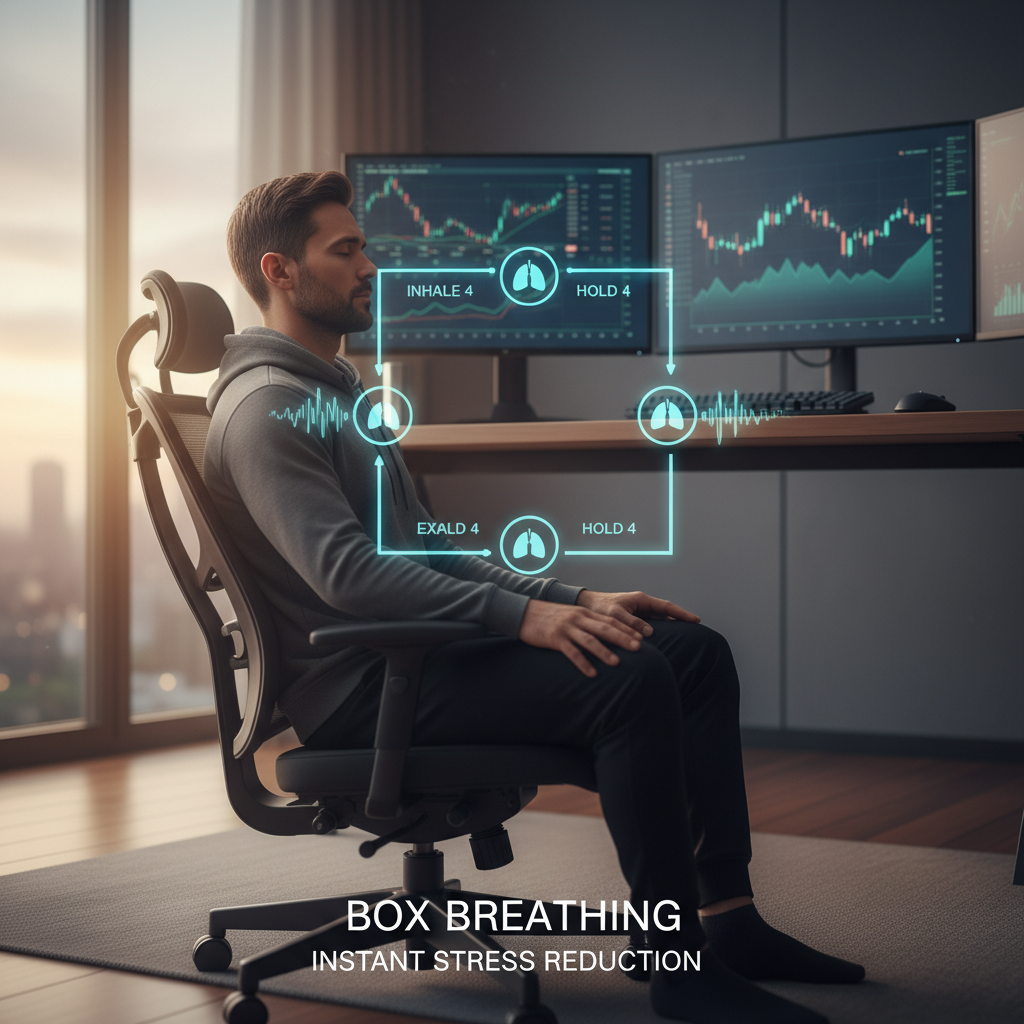
Before Trading
- Review your trading plan and rules
- Set daily profit and loss limits
- Mentally prepare for potential outcomes
- Clear your mind of outside stress
During Trading
- Stick to your predetermined levels
- Avoid watching price constantly
- Focus on execution, not outcome
- Use predetermined orders when possible
After Trading
- Review trades objectively
- Learn from mistakes without emotional attachment
- Celebrate good execution, not just profits
- Reset mentally for the next session
Common Psychological Traps
The Confirmation Bias Trap
✅ Confirmation Bias in Trading
What it is: Seeking information that confirms your existing beliefs while ignoring contradictory evidence.
Trading Examples:
- Only reading news that supports your position
- Ignoring warning signs in your analysis
- Staying in losing trades because "it will come back"
- Exaggerating the importance of winning trades
Solution: Actively seek disconfirming evidence. Ask "What could make this trade wrong?"
The Anchoring Effect
⚓ Anchoring Bias
What it is: Over-relying on the first piece of information received.
Trading Examples:
- Remembering the highest price and expecting return to that level
- Being anchored to entry price instead of current market conditions
- Using outdated support/resistance levels
Solution: Regularly update your analysis with current price action.
The Sunk Cost Fallacy
💰 Sunk Cost Thinking
What it is: Continuing a behavior because of previously invested resources (time, money, effort).
Trading Examples:
- Staying in losing trades because "I've been in it so long"
- Adding to losing positions to "average down"
- Not cutting losses because "it was a good setup"
Solution: Make decisions based on current market conditions, not past investments.
Psychological Performance Techniques
1. Pre-Market Routine
🌅 Daily Mental Preparation
- Review your trading plan (5 minutes)
- Set daily limits (profit and loss)
- Check economic calendar for major events
- Review key levels for your pairs
- Mental visualization of executing your plan
- Positive affirmations about discipline and patience
2. During-Trade Management
⚡ Emotional Control During Trades
- Don't watch every tick: Use limit orders and walk away
- Trust your analysis: Don't second-guess your setup
- Accept the outcome: Focus on process, not results
- Maintain routine: Continue normal activities
3. Post-Trade Review
📊 Objective Trade Analysis
Questions to Ask
- Did I follow my trading plan?
- Was my risk management appropriate?
- Did I execute the entry correctly?
- Should I have taken the trade at all?
- What can I improve for next time?
What NOT to Focus On
- The dollar amount won or lost
- How "obvious" the outcome was
- Comparison to other traders
- Making up for past losses
Dealing with Trading Stress

Types of Trading Stress
😰 Financial Stress
- Fear of losing money you can't afford
- Pressure to make money quickly
- Worry about account drawdowns
- Stress from over-leveraging
🧠 Psychological Stress
- Pressure to prove you're right
- Fear of missing opportunities
- Stress from inconsistent results
- Comparison to other traders
Stress Management Techniques
🧘 Stress Reduction Methods
- Proper position sizing: Never risk money you can't afford to lose
- Take regular breaks: Step away from screens periodically
- Maintain work-life balance: Don't let trading consume you
- Physical exercise: Reduce overall stress levels
- Adequate sleep: Make decisions with a clear mind
- Meditation: Develop mental resilience
Building Confidence vs. Overconfidence
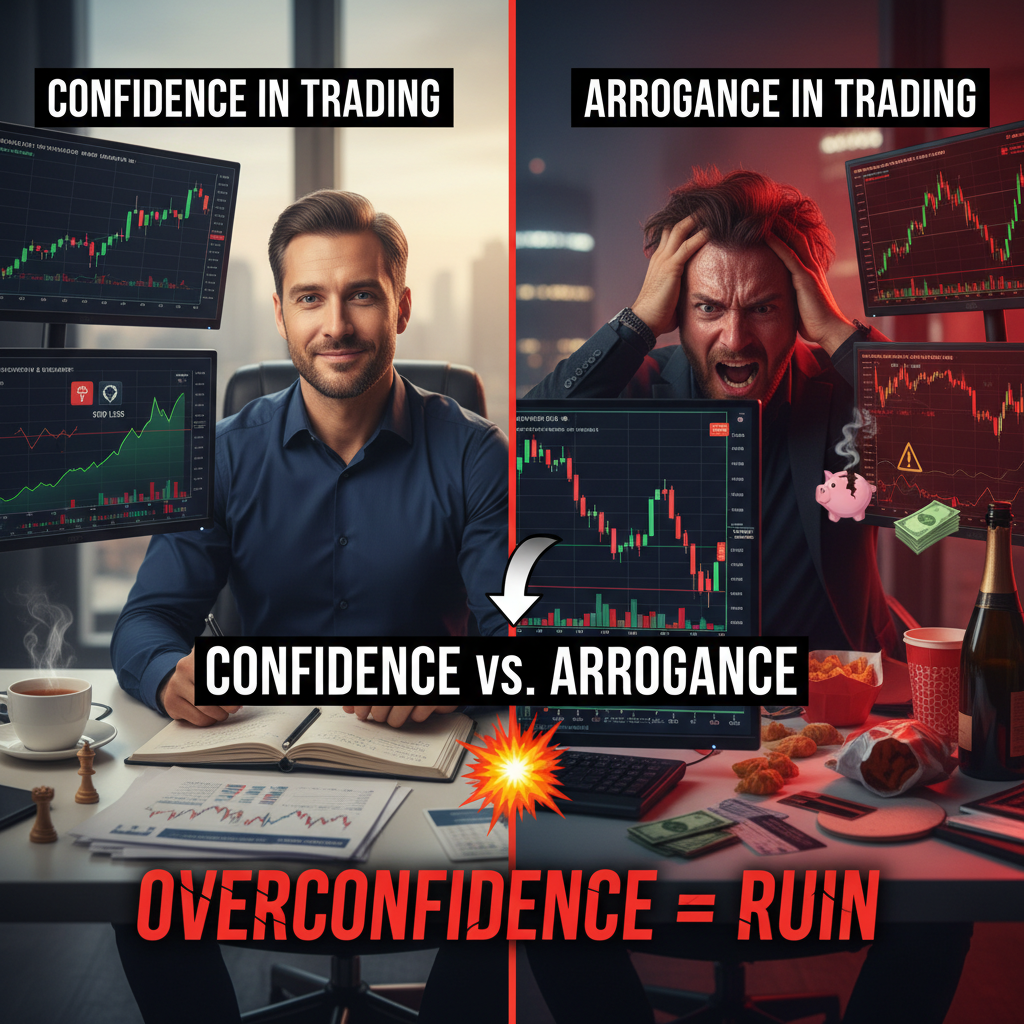
Healthy Confidence
✅ Confident Trader Characteristics
- Believes in their process, not individual outcomes
- Maintains discipline during winning and losing streaks
- Sticks to their strategy regardless of recent results
- Accepts losses as part of the business
- Continues learning and improving
Destructive Overconfidence
❌ Overconfident Trader Characteristics
- Increases risk after wins
- Ignores risk management rules
- Takes trades outside their strategy
- Believes they can't lose
- Becomes careless with execution
Developing Trading Discipline
🎯 Discipline Building Exercises
Daily Discipline Practice
- Write down your trading rules and review them daily
- Calculate position sizes before every trade
- Set stop losses before entering positions
- Track every trade in a journal
- Review your psychology after each session
Weekly Discipline Review
- Did you follow your rules consistently?
- Where did you let emotions influence decisions?
- What psychological challenges did you face?
- How can you improve discipline next week?
When to Take Trading Breaks
Mandatory Break Signals
- You hit your daily loss limit
- You feel the urge to "make it back"
- You're trading emotionally rather than analytically
- You haven't followed your rules multiple times
- You're checking positions obsessively
Longer Breaks
⏸️ Extended Time Off
Consider taking 1-2 weeks off when:
- You're in a prolonged drawdown
- You can't follow your rules consistently
- Trading is causing excessive stress
- You've lost confidence in your strategy
- Life stress is affecting your trading
Use break time to:
- Review your trading plan thoroughly
- Practice on demo accounts
- Study trading psychology materials
- Address underlying emotional issues
- Regain perspective on trading
Conclusion
Trading psychology is the foundation upon which all successful trading strategies are built. Without emotional control, the best analysis in the world will fail. With proper psychology, even average strategies can become profitable.
Developing professional trading psychology requires:
- Understanding your emotional triggers and how they affect trading
- Creating and following strict rules regardless of emotions
- Practicing emotional control in both winning and losing situations
- Building discipline through consistent routines
- Seeking balance between confidence and humility
Remember that trading psychology isn't something you perfect once—it's an ongoing practice. Every day presents new emotional challenges, and your ability to handle them determines your long-term success.
Comments
Post a Comment